Häuserchronik Mattersburg
Interactive local history

Häuserchronik Mattersburg
Interactive local history

The Hauptplatz around 1930 – as a tactile model
The Hauptplatz around 1930 at 1:100 scale – 12 houses, 3D-printed on a base plate laid out after the cadastral map of the time. Every house can be picked up and held. Tactile for people with visual impairments, understandable for children, usable without any prior knowledge.
Place a house on the reading plate and the display shows its history: historical photographs, the house chronicle, who lived and worked here – to read or to listen to, in German and English.
It also works without the display, on your own phone: scan the QR code, no app needed.
12 houses, 3D-printed at 1:100 scale.
Around 1930 the Hauptplatz was the stage of the young town: savings bank, pharmacy, hotel, shops and inns, the surgery of Dr. Richard Berczeller. This is where people shopped, negotiated and celebrated. Hardly any place in Mattersburg has changed so much since – many of the façades of that time have been rebuilt, raised by a storey or have disappeared entirely. Anyone crossing the square today sees only traces.
Tap a building to learn more about it
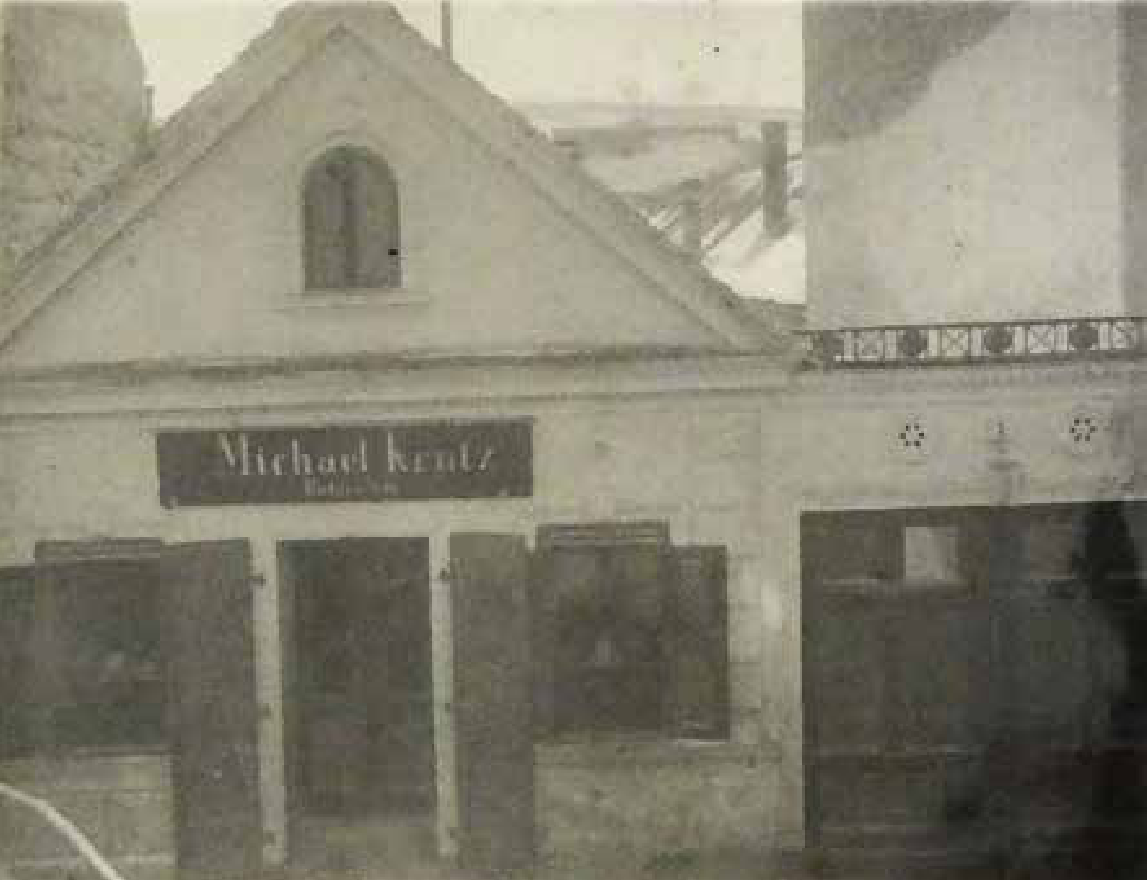
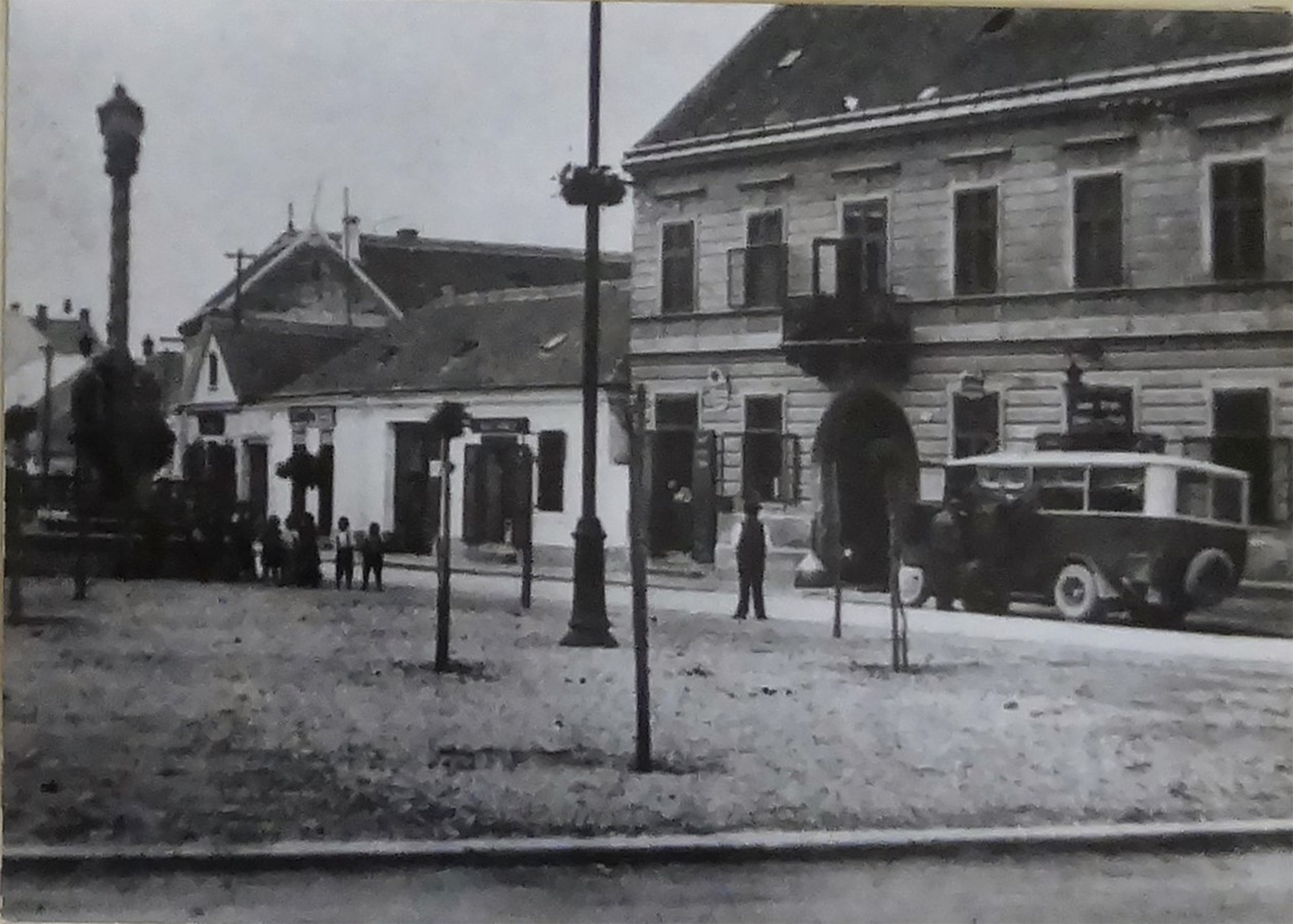
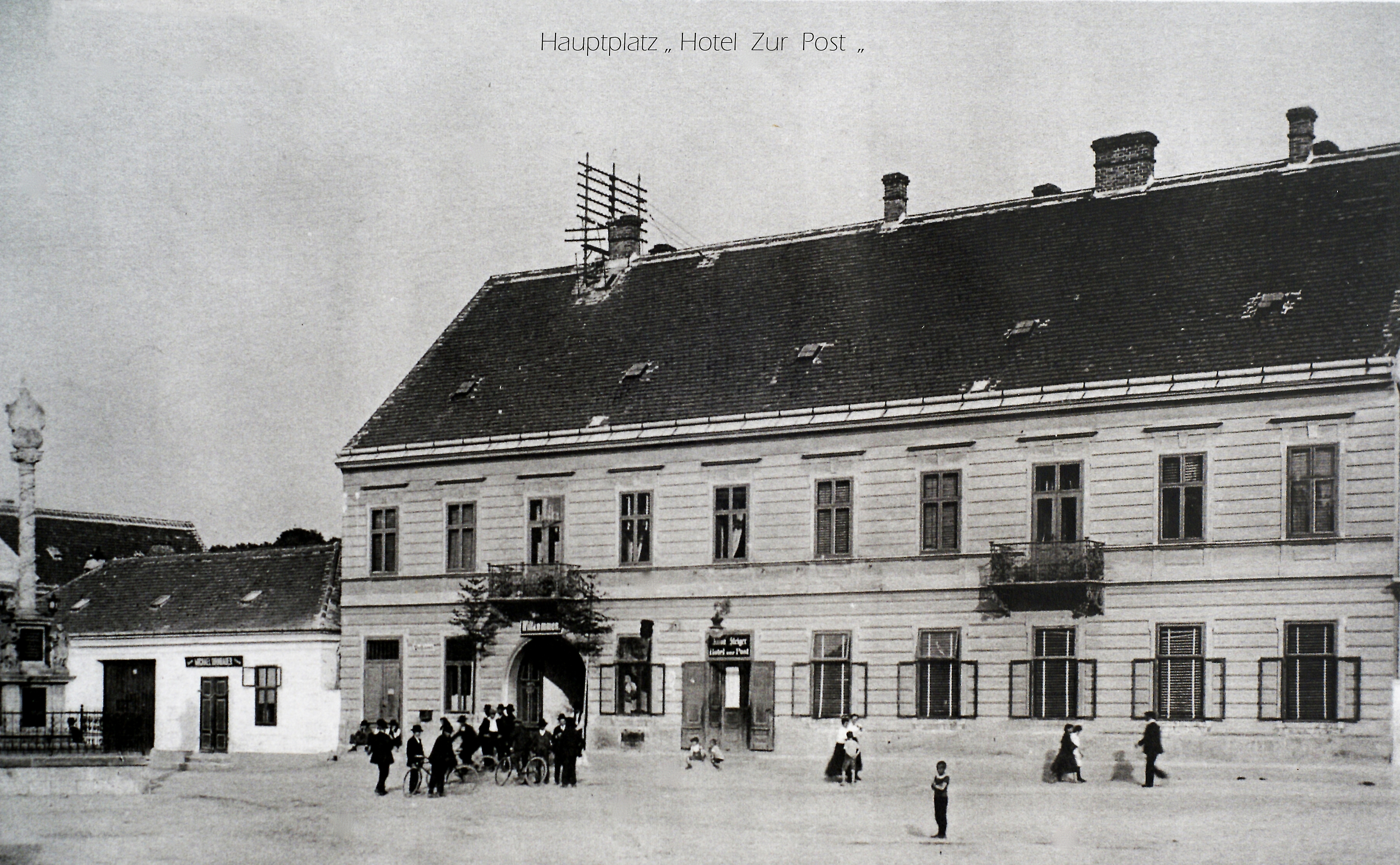
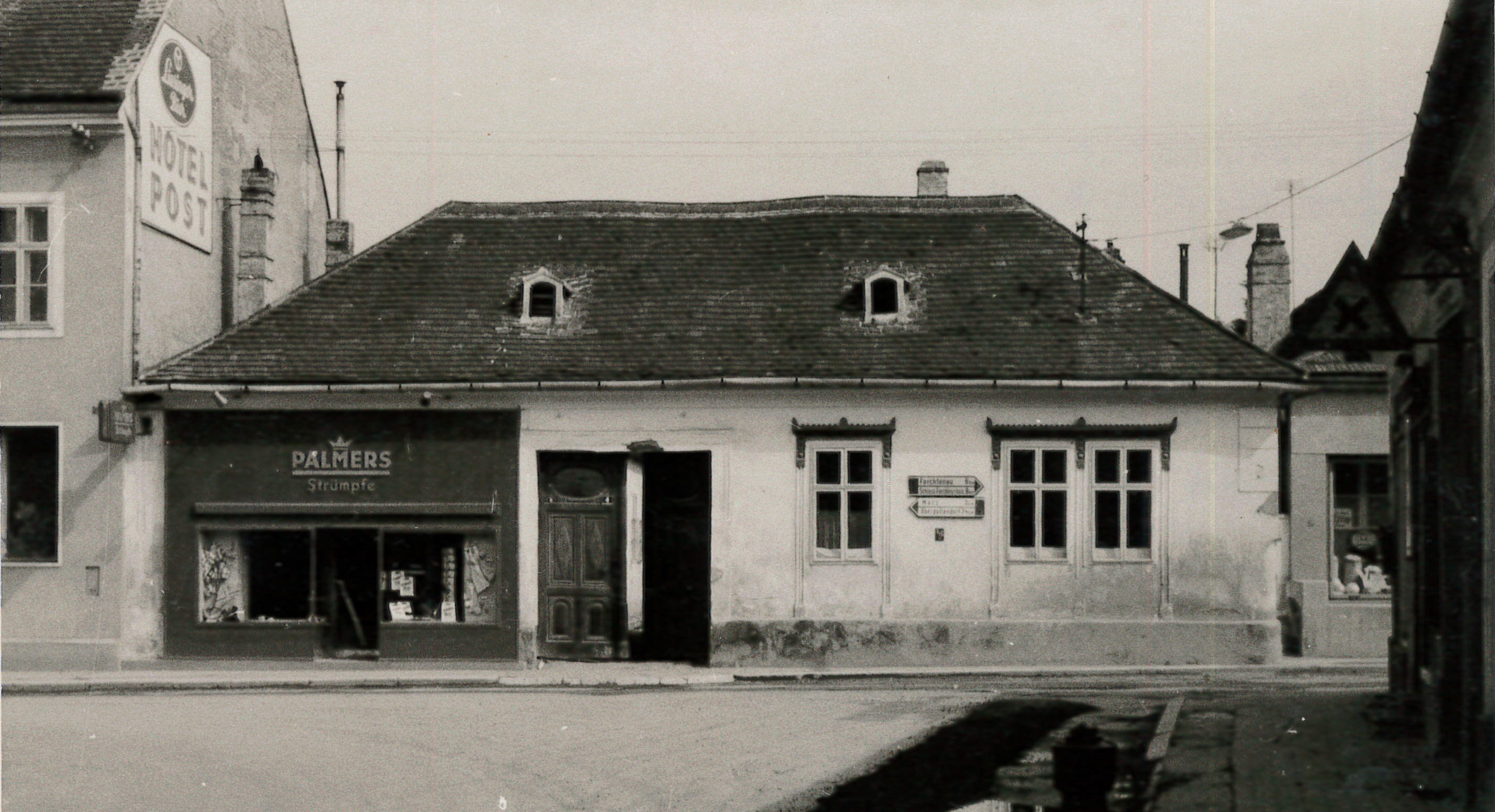
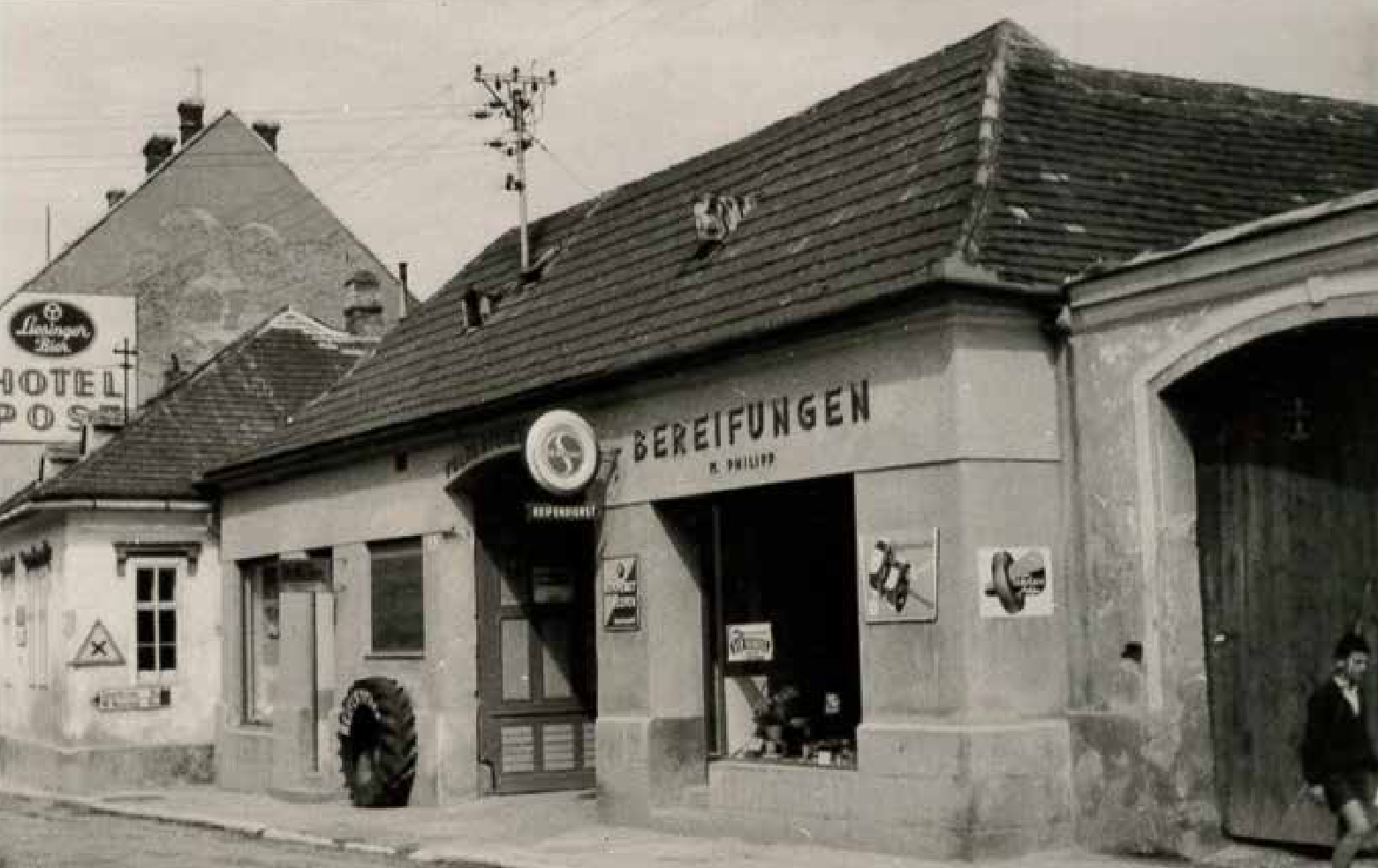
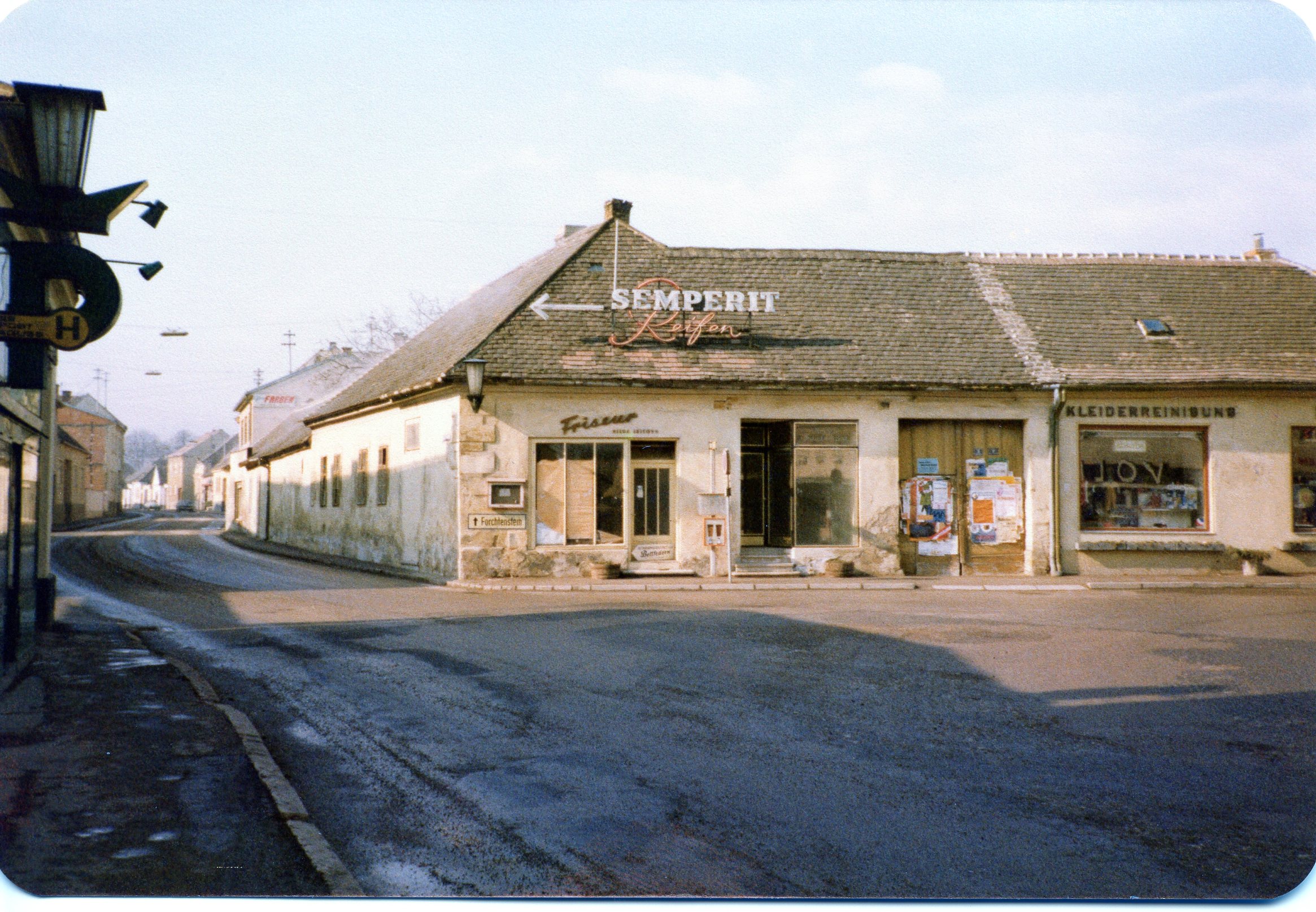
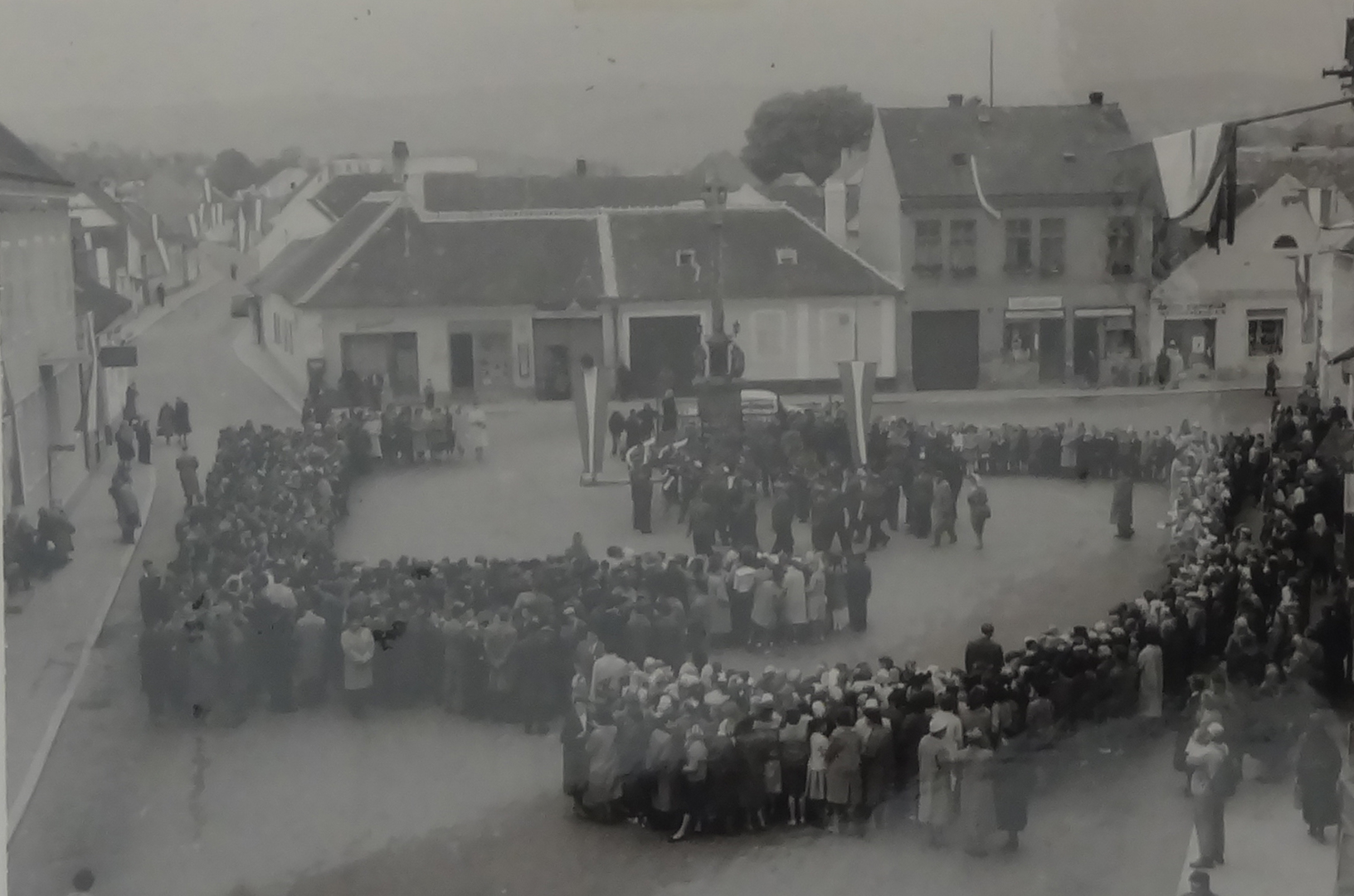
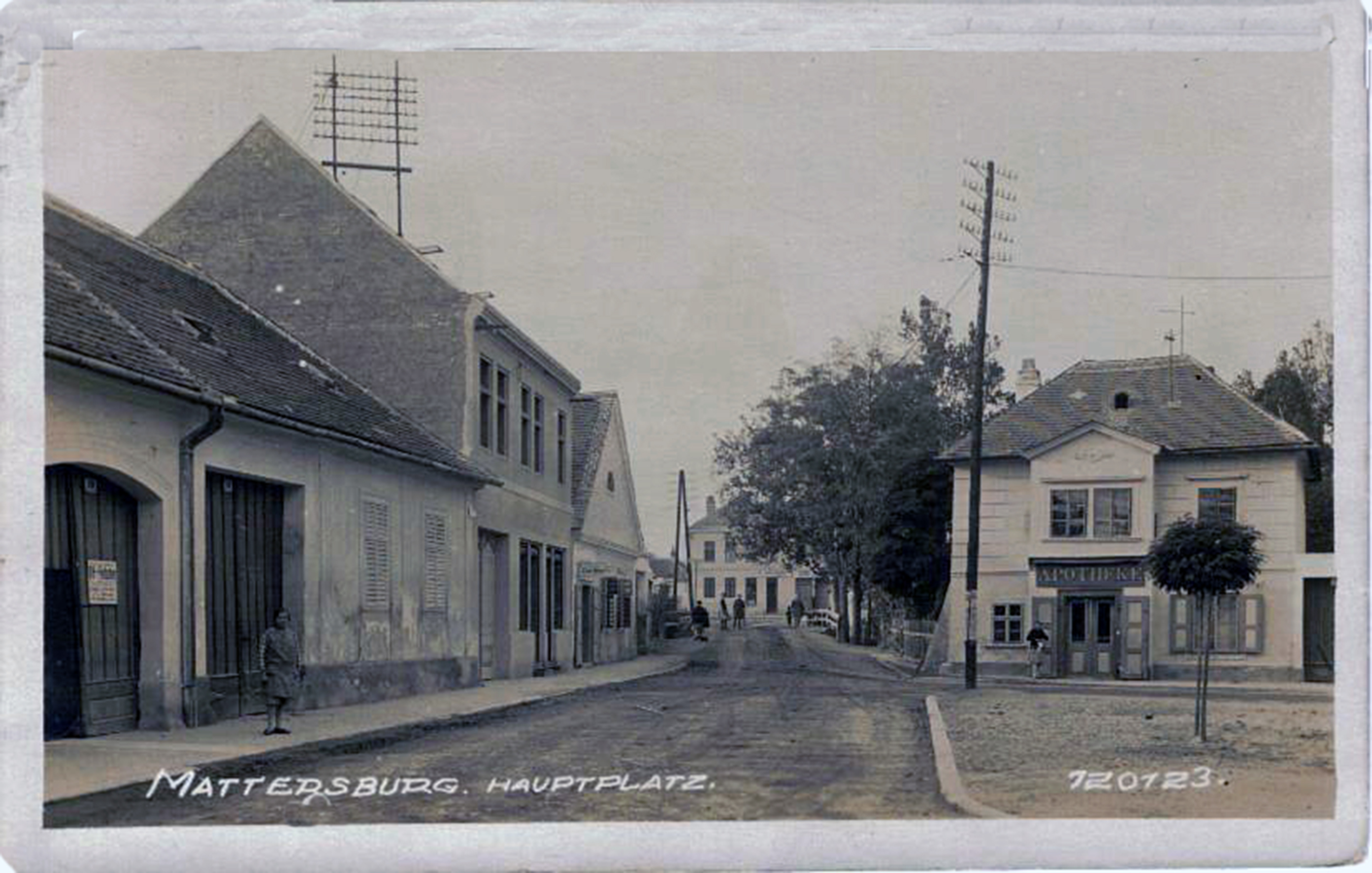
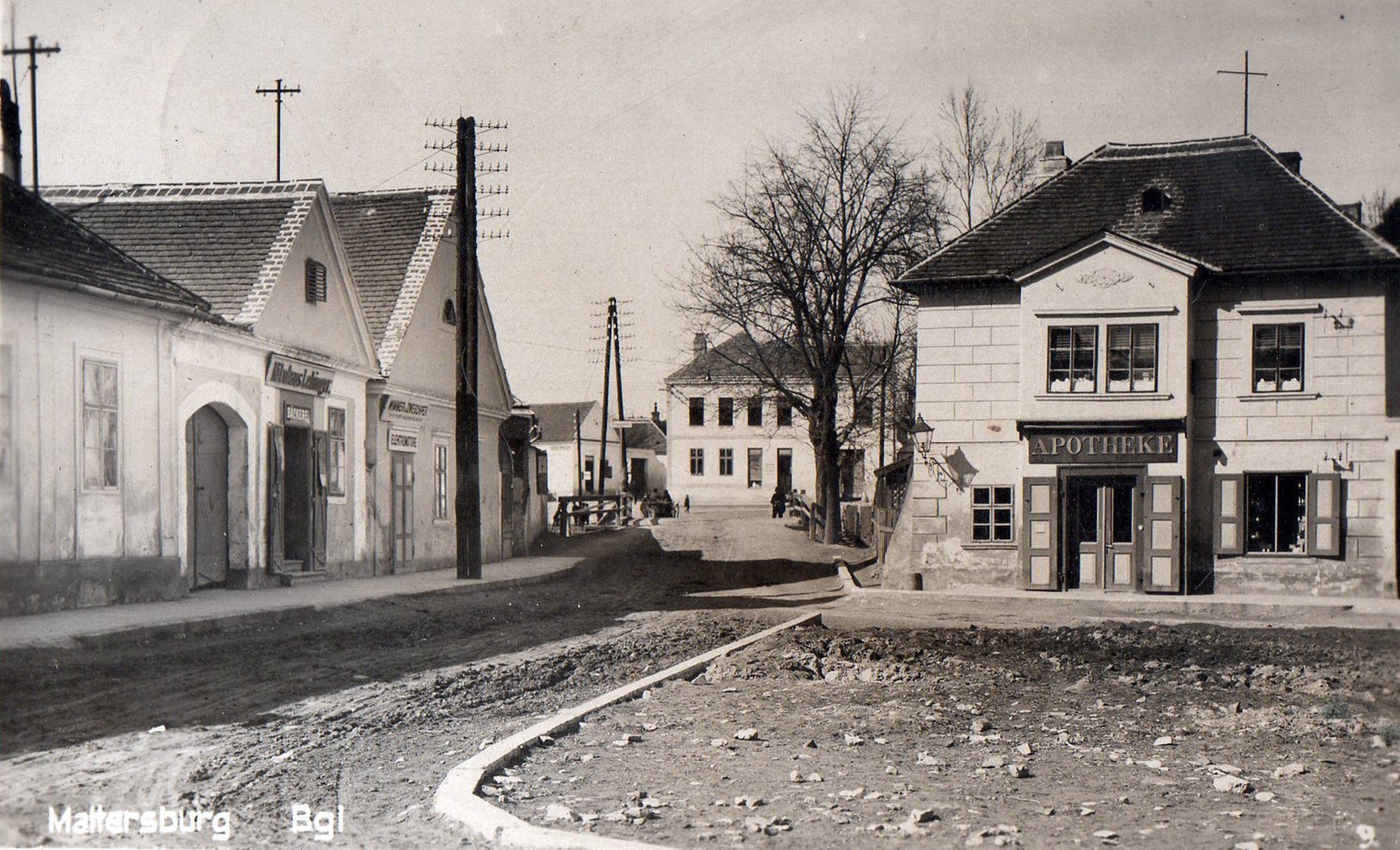
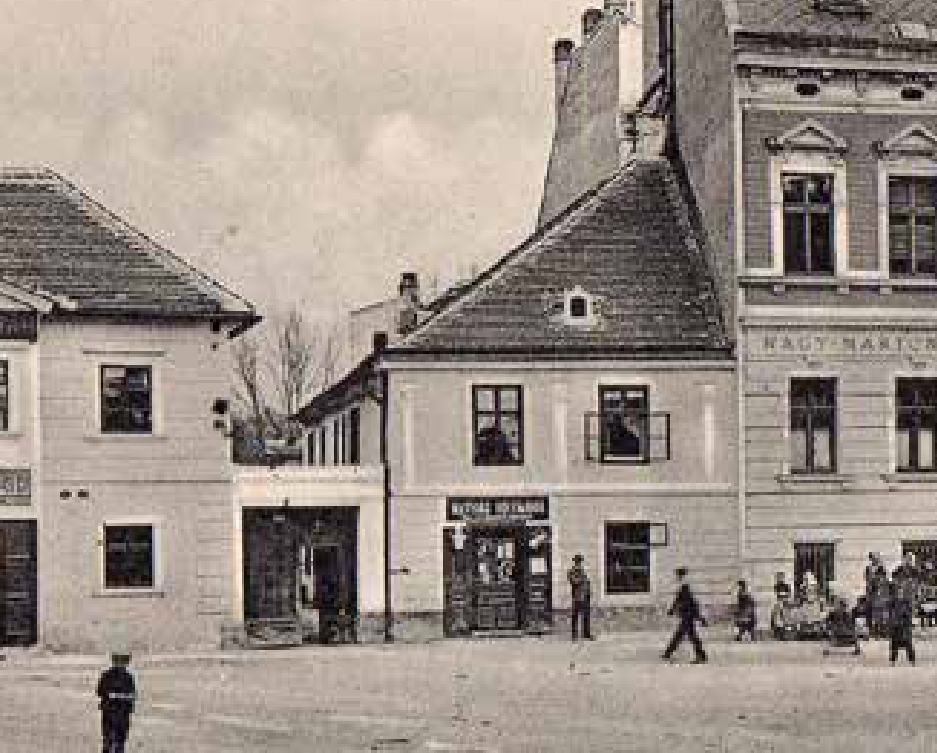
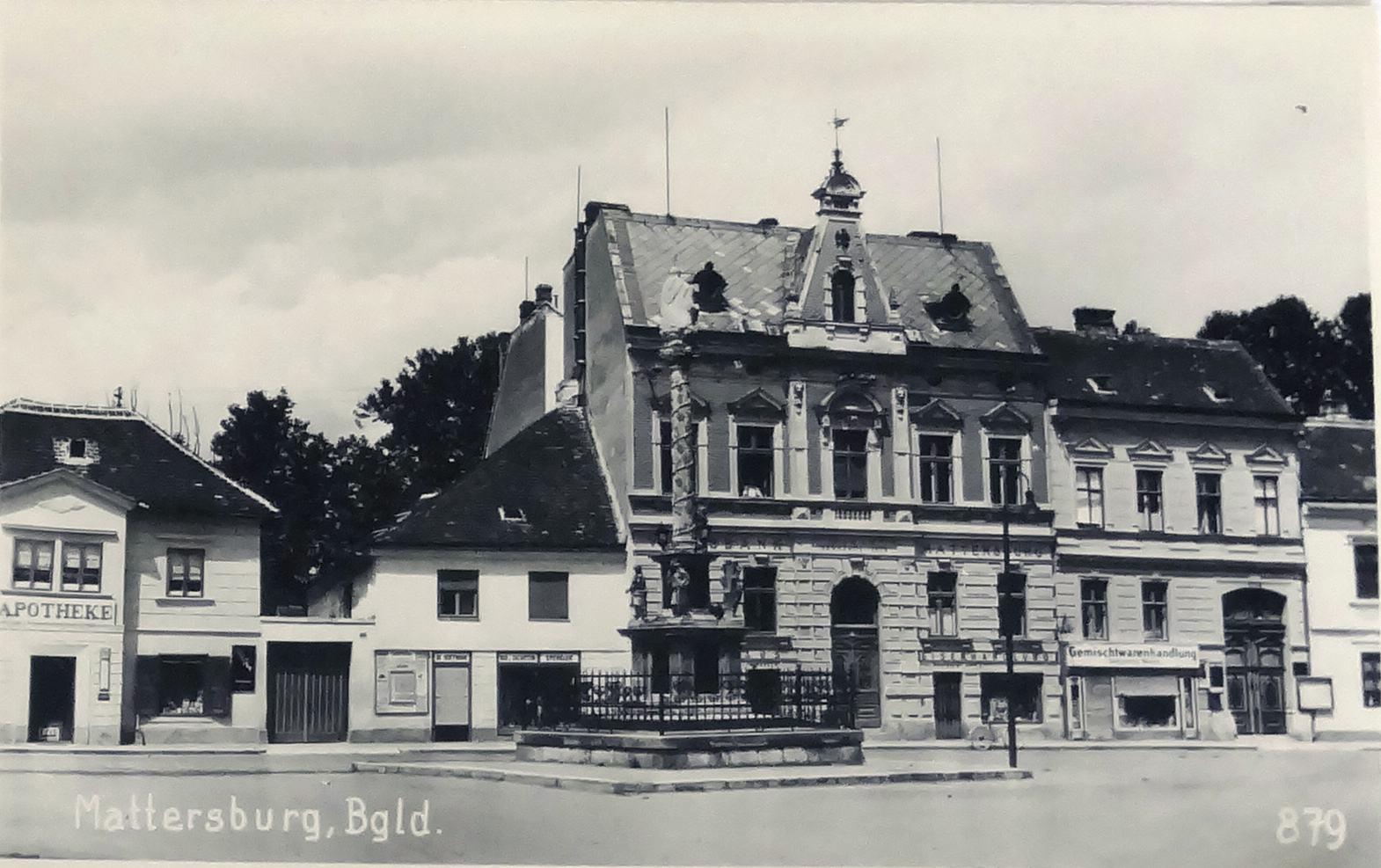
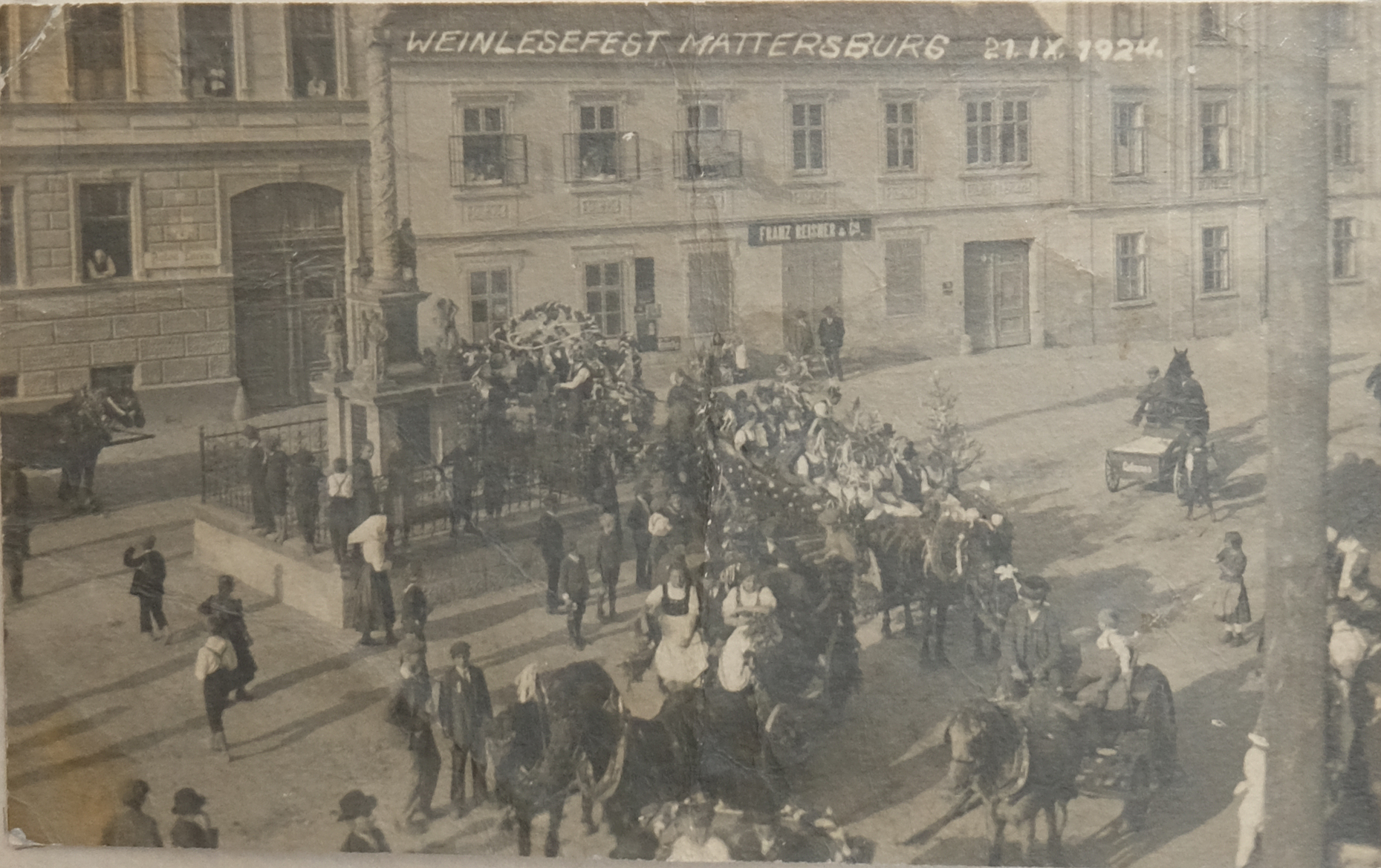
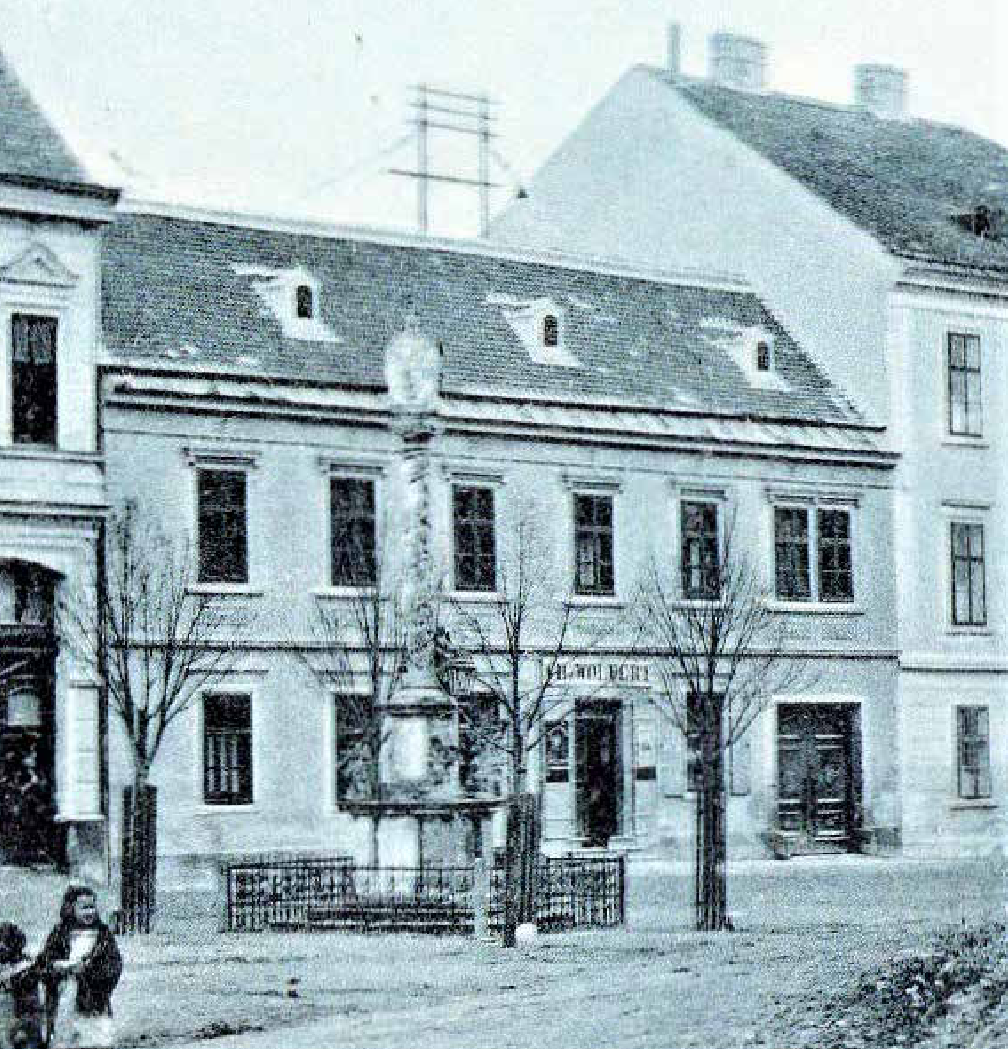
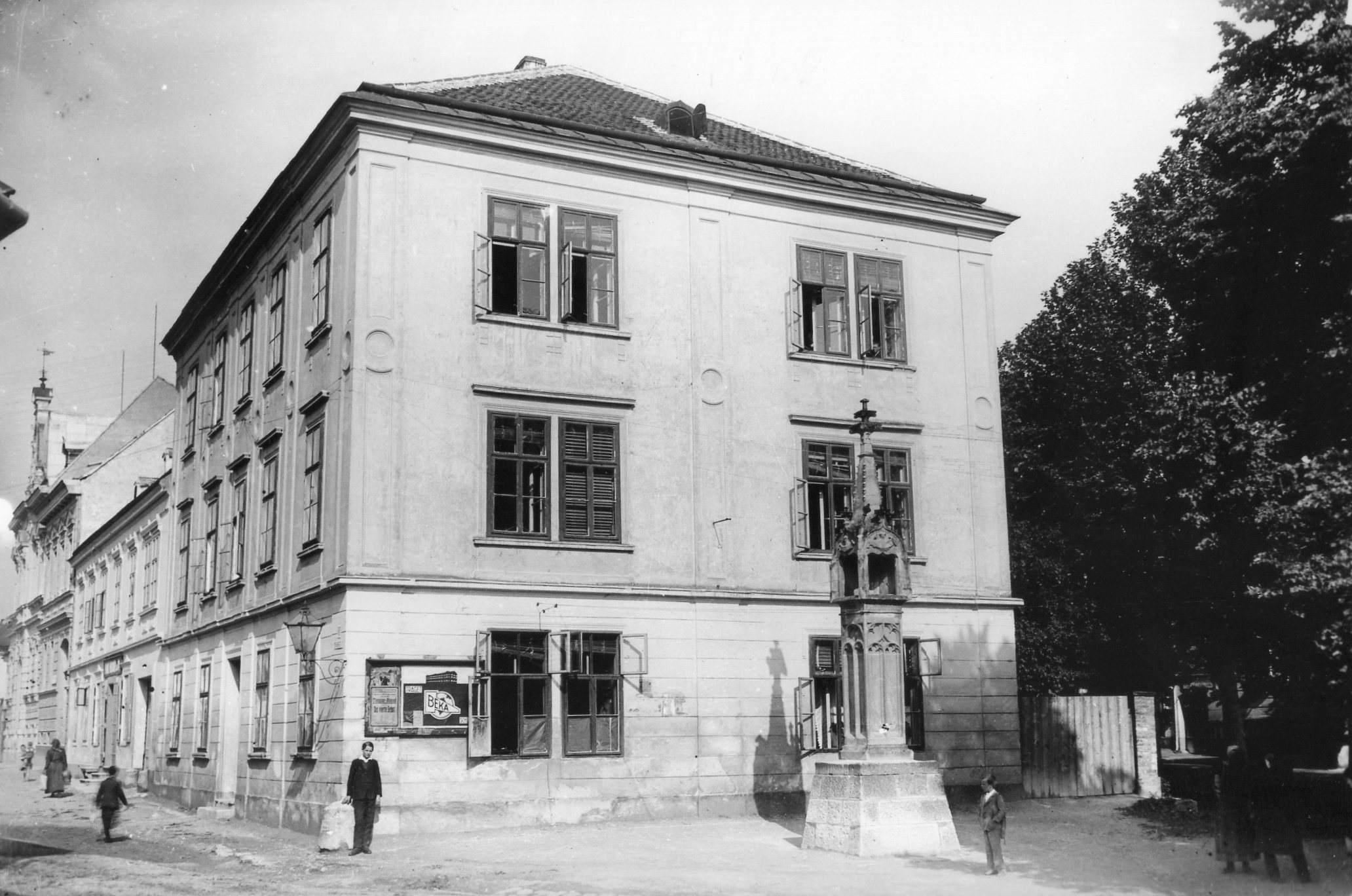
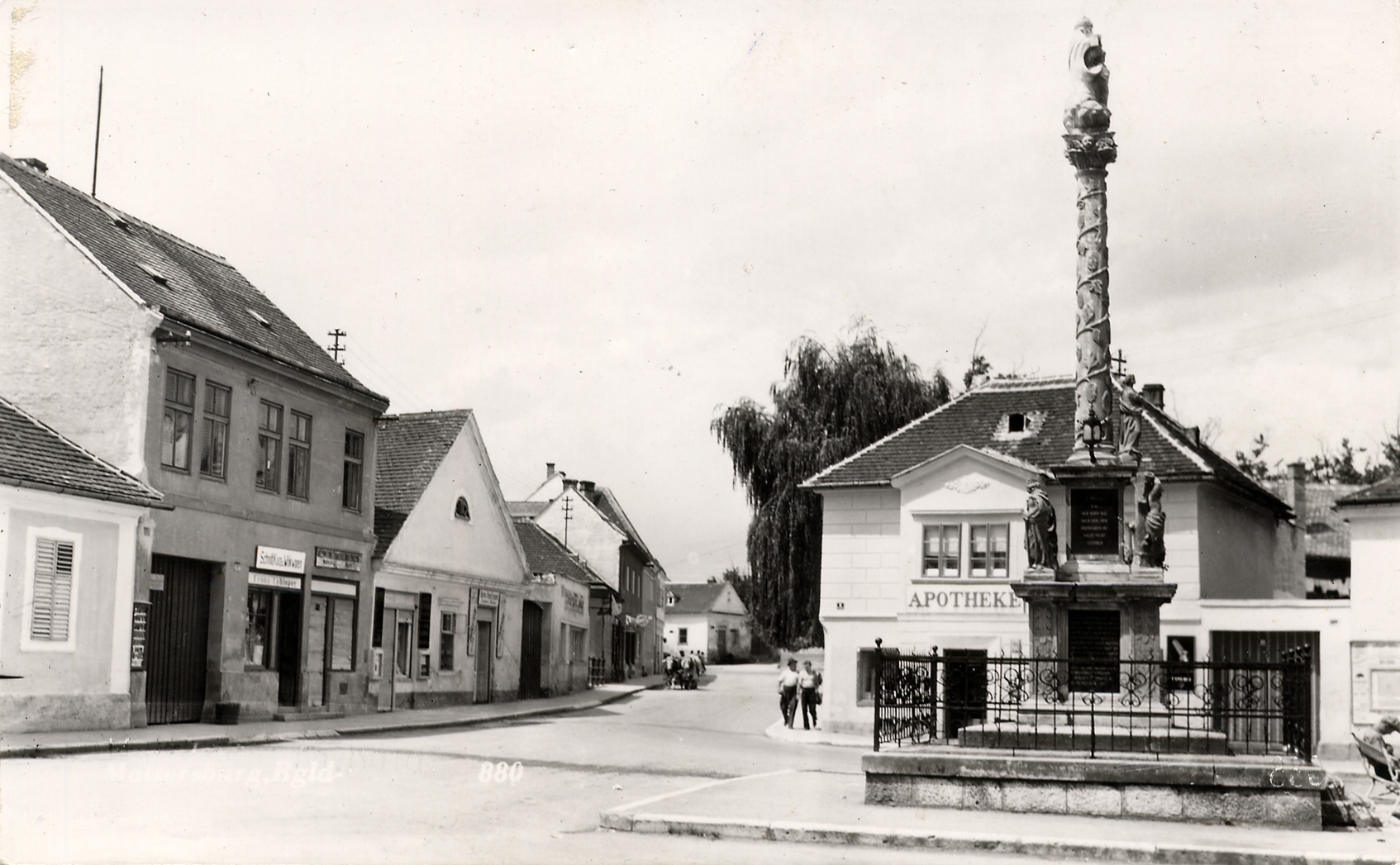
The Hauptplatz model is a prototype. It shows what this combination of tactile model, source work and digital content can achieve – at a scale that could be realised from our own resources, without funding. Grant applications are currently under way for further parts of the town, a larger number of buildings, deeper content and a permanent installation. Once these have been decided, the project will continue on a larger scale.
Visitors share their experiences
History here is not handed down from above. The houses on the Hauptplatz were homes, shops, workshops – and the people who came and went there know things that are in no archive: what the bakery looked like, who lived on the first floor, what became of the neighbour. These are exactly the memories the model collects.
This is how the town model becomes a shared memory: the town tells its own story, and it keeps growing with every contribution.